
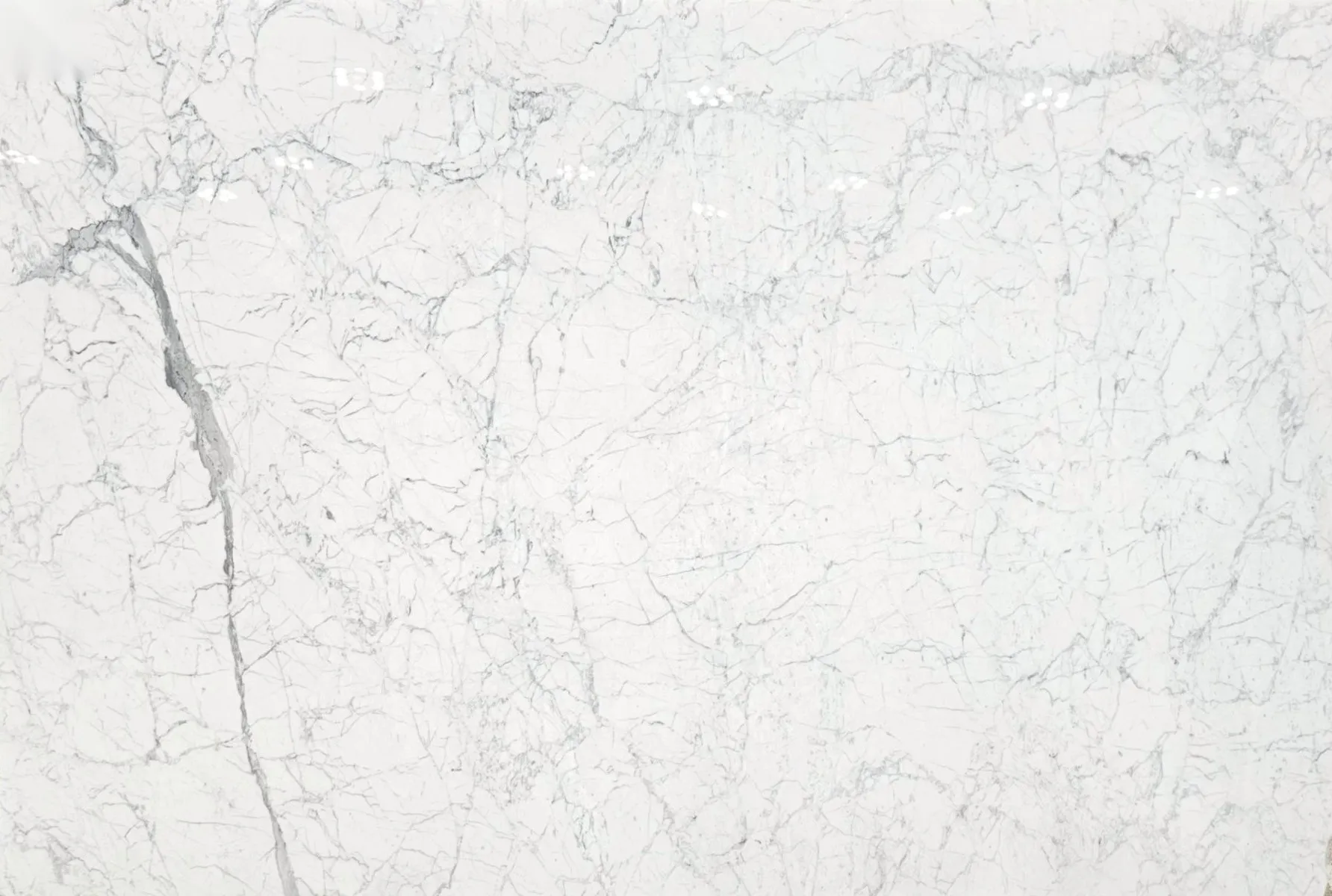
Few materials make a kitchen or bathroom feel as considered as white marble. It is also a natural stone with a particular chemistry, and knowing what to expect is the difference between loving it for decades and being surprised in the first month.
The two things that happen to marble
Etching
Marble is made mostly of calcite (calcium carbonate) or dolomite (calcium magnesium carbonate). Acids react with carbonates. When lemon juice, vinegar, wine, tomato, some soft drinks or acidic cleaners sit on marble, they dissolve a microscopic layer of the surface, leaving a dull mark — an etch. On polished marble an etch looks like a water mark that will not wipe off; on honed marble it is much harder to see.
Sealing does not prevent etching. Etching is a chemical change to the surface, not a stain. Dolomitic marbles such as Greek Thassos White react more slowly than calcitic marbles, but they are not immune.
Staining
Marble is slightly porous. Oils, coloured liquids (coffee, red wine, turmeric) and rusting metal can be absorbed and leave a stain. Here a good impregnating sealer genuinely helps: it slows absorption, giving you time to wipe spills away.
Choosing well for each room
Kitchens. If you want a surface that stays pristine, marble may not be the right material for the main preparation area. If you enjoy a surface that develops a soft patina — as many traditional marble kitchens do — choose a honed finish, seal it, and accept etching as character. Splashbacks, islands used mainly for serving, and shelving are excellent low-risk uses.
Bathrooms. Marble suits bathrooms well: walls, vanities and floors see fewer acids than kitchens. The main risks are acidic or abrasive cleaning products, and hair dyes or cosmetics left on vanity tops. Use honed or textured finishes underfoot for grip, particularly in showers.
Everyday care
- Wipe spills promptly, especially acidic and coloured ones.
- Clean with warm water and a pH-neutral cleaner made for natural stone. Avoid vinegar, lemon-based products, bleach and abrasive powders.
- Use trays for toiletries and oils, coasters under glasses, boards for cutting.
- Re-seal periodically. How often depends on the stone, finish, sealer and use — a simple test is to place a few drops of water on the surface: if they darken the stone within a few minutes, it is time to re-seal.
When marks happen
Light etching on honed marble can often be blended with a marble polishing compound or a gentle re-hone. Polished surfaces with etch marks can be restored professionally. Many stains can be drawn out with a poultice suited to the type of stain. Because these are natural materials, test any treatment in an inconspicuous area first, or ask a stone restoration specialist.
Installation matters
Light-coloured marbles can be discoloured by unsuitable adhesives and by moisture moving through the substrate. Ask your installer to use setting materials recommended for natural marble, and make sure wet areas are properly waterproofed before the stone goes in.
This guidance is general. Your fabricator or installer should confirm the right sealer, finish and installation method for the specific stone and use. If you are unsure which of our whites suits your room, tell us about your project.