
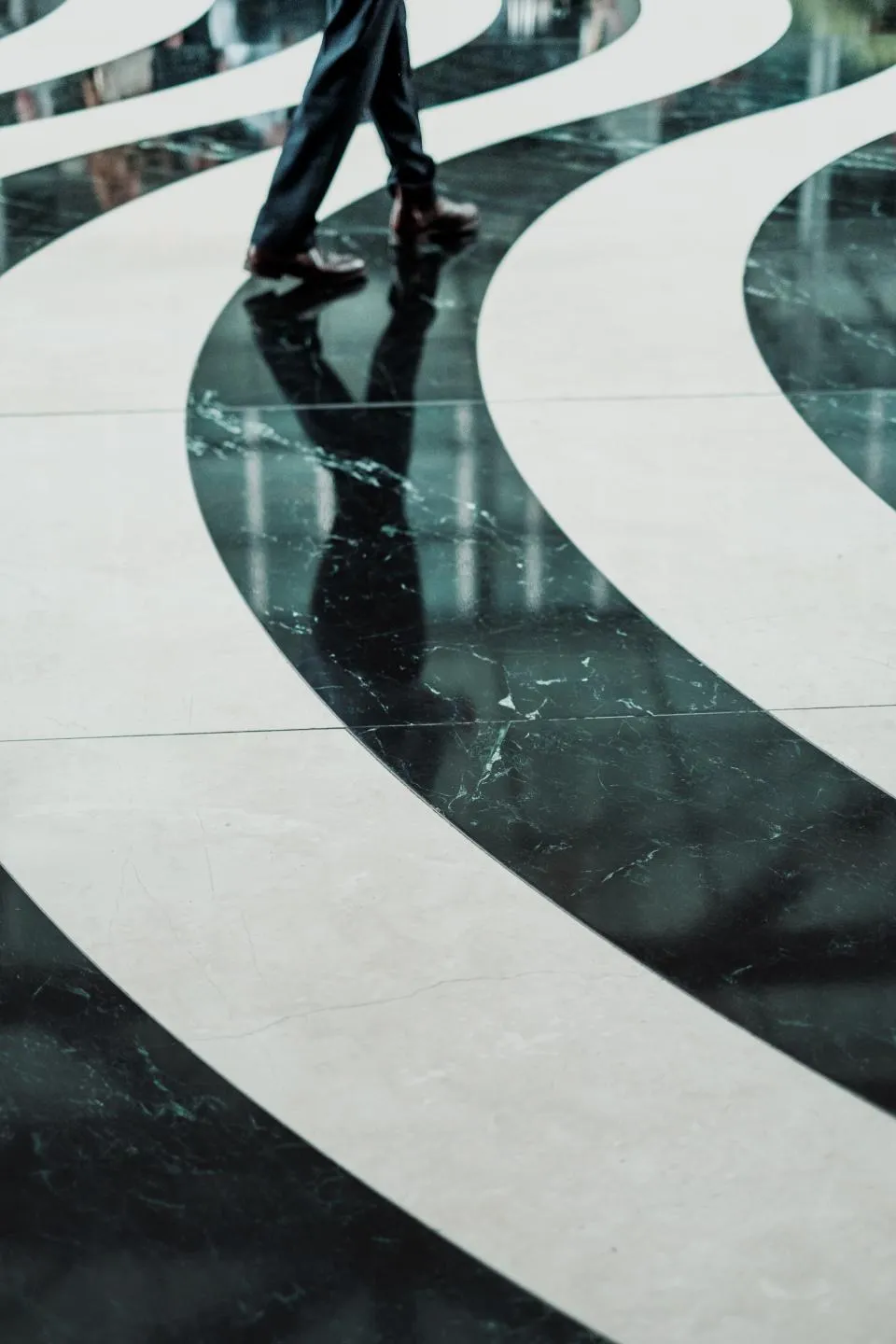
Choosing a marble is only half the decision. The finish — how the surface is worked after the slab is cut — changes the colour you see, how the stone feels underfoot, how it shows wear and how much care it needs. Here are the finishes you are most likely to be offered, and what each is good for.
Polished
The surface is ground with progressively finer abrasives until it reflects light like glass. Polishing deepens colour and sharpens contrast: veins look darker and the ground looks brighter. It is the finish most people associate with marble.
Good for: walls, vanities, feature surfaces, furniture, and floors in areas that stay dry and see moderate traffic.
Be aware: polished floors can be slippery when wet, and scratches and etch marks are easier to see on a reflective surface. In high-traffic commercial floors, the shine will need periodic professional restoration.
Honed
The grinding stops before a polish appears, leaving a smooth, matt or satin surface. Colours look softer and veining less contrasted. Honed marble feels calm and contemporary.
Good for: floors, kitchens, bathrooms and anywhere you want the stone to age gracefully. Everyday marks are much less visible than on polished stone.
Be aware: a honed surface is slightly more open than a polished one, so sealing matters, particularly in kitchens.
Brushed
Abrasive brushes follow the natural softer and harder areas of the stone, producing a gently undulating, tactile surface with a low sheen. Brushing gives an aged, lived-in quality.
Good for: floors, terraces where suitable, bathrooms and rustic or relaxed interiors.
Be aware: texture can hold dirt in heavy-use areas; choose cleaning methods accordingly.
Leathered
Similar to brushing but finer, a leathered finish has a soft, slightly textured feel and a low natural lustre — like a worn leather surface. It tends to deepen colour slightly compared with honing.
Good for: worktops and surfaces that are touched often, where you want texture without a rough feel.
Be aware: availability depends on the stone and the processor; ask before you design around it.
Textured and anti-slip finishes
Sandblasted, bush-hammered or flamed finishes create a rougher surface for grip. Flaming relies on heat and is generally used on granite rather than marble. For marble in wet or outdoor areas, ask which textured finishes are suitable for the specific stone and use.
How finish interacts with each white
- Italian Statuario White: polished finishes make its veining dramatic; honed softens it into something quieter.
- Greek Thassos White: its crystalline sparkle is most visible when polished; honed gives a very even, chalky white.
- Vietnam White and Namibia White: both read as softer and warmer when honed.
Ask to see the finish, not just the stone
Always look at a sample in the finish you intend to use, under the light of the room. A polished sample of a stone can be misleading if the floor will be honed. And if consistency across a project matters, confirm that all material will be finished in the same production run.
Finish availability varies by stone and supplier. Ask us which finishes are currently offered for each of our marbles.